

16
July
What Property Owners Should Know About High-Rise Backflow Preventer Replacement
Backflow prevention protects drinking water from contamination. While many property owners think about annual testing, every backflow preventer eventually reaches the end of its service life. At that point, replacement becomes the safest and most cost-effective option.
If you are researching backflow replacement cost or planning a high-rise backflow preventer replacement, understanding the factors behind pricing can help you budget wisely. The cheapest option rarely delivers the best long-term value. A properly installed, tested, and compliant backflow preventer protects both your property and the public water supply.
At NC Backflow Tests, we help commercial buildings, residential communities, and high-rise properties throughout North Carolina replace aging backflow assemblies while meeting local regulations.
What Is a Backflow Preventer?
A backflow preventer is a mechanical device installed in a plumbing system to stop contaminated water from flowing backward into the public water supply. This reverse flow can happen because of backpressure or backsiphonage, especially during water main breaks, firefighting activities, or sudden pressure changes.
The U.S. Environmental Protection Agency (EPA) explains that cross-connections without proper backflow protection can create serious public health risks. Local water authorities require approved backflow prevention devices to reduce these risks.
When Should a Backflow Preventer Be Replaced?
A backflow preventer does not last forever. Like any mechanical equipment, its internal components wear out over time.
Common signs that replacement may be necessary include:
- Repeated failures during annual testing
- Internal corrosion or mineral buildup
- Leaking relief valves
- Cracked or damaged valve bodies
- Parts that manufacturers no longer produce
- Major repairs costing nearly as much as replacement
Sometimes repairing the assembly makes financial sense. However, when repairs become frequent, replacing the entire unit often saves money over the long term.
Understanding Backflow Replacement Cost
One of the most common questions property owners ask is, “How much does a backflow replacement cost?”
The answer depends on several real-world factors rather than a single fixed price.
Size of the Assembly
Larger commercial assemblies cost more than residential units because they require larger components, heavier equipment, and more installation time.
Type of Backflow Preventer
Different systems use different devices, including:
- Double Check Valve Assemblies (DCVA)
- Reduced Pressure Zone Assemblies (RPZ)
- Pressure Vacuum Breakers (PVB)
Each device has different installation requirements and replacement costs.
Installation Complexity
A replacement inside a mechanical room usually takes less effort than replacing a device located underground, inside a vault, or on a rooftop.
If crews need cranes, lifts, confined-space access, or traffic control, labor costs increase.
Local Permit Requirements
Many municipalities require permits, inspections, and certified testing after installation. These requirements vary by water authority and become part of the overall project cost.
Emergency vs. Scheduled Replacement
Emergency replacements often cost more because technicians must respond immediately and source parts quickly. Scheduling replacement before complete failure usually reduces both downtime and expenses.
High-Rise Backflow Preventer Replacement Requires Specialized Planning
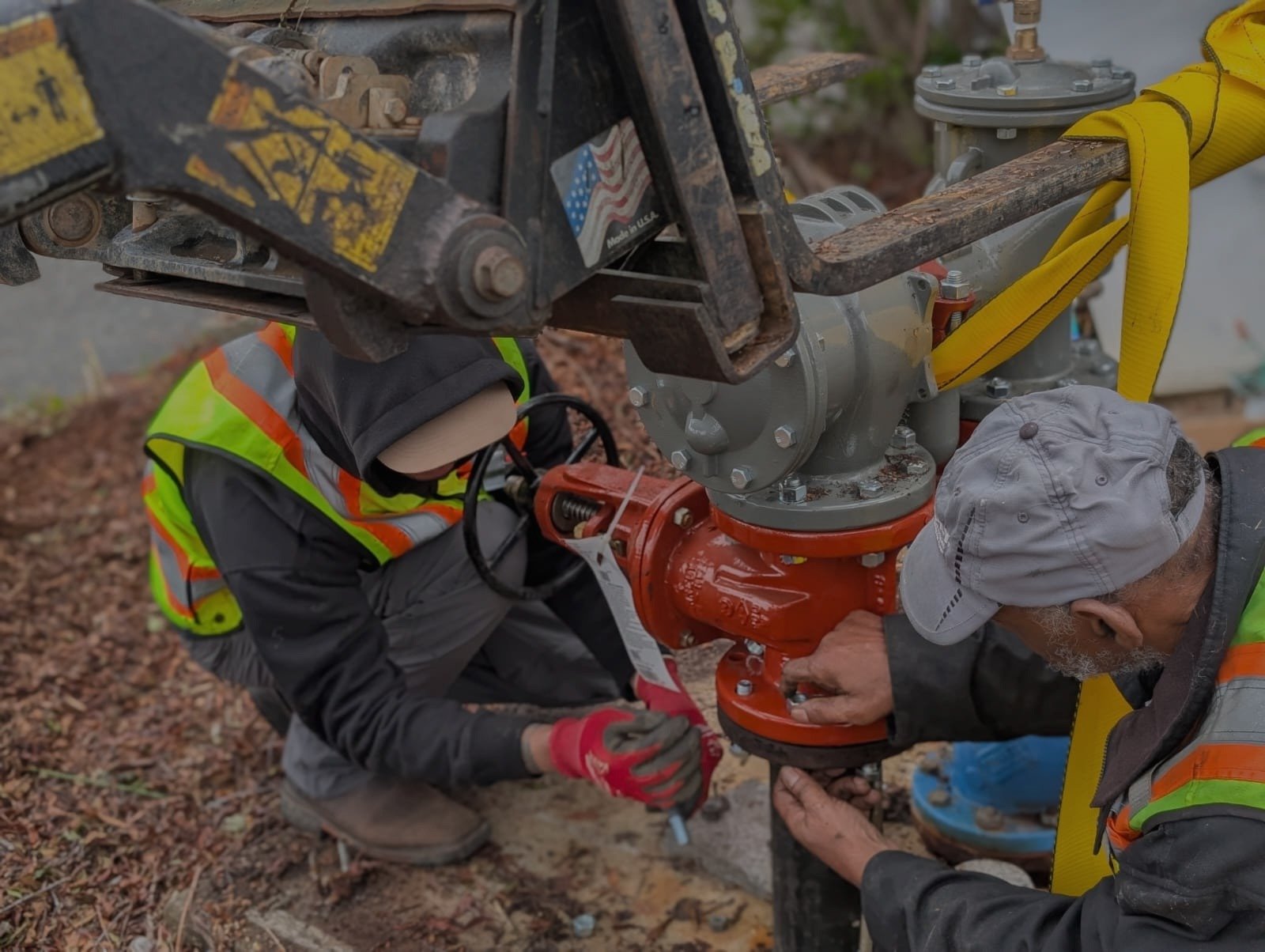
Replacing a backflow preventer in a high-rise building is far more complex than replacing one in a single-family home.
High-rise buildings rely on carefully balanced plumbing systems that serve dozens or even hundreds of occupants. Any interruption requires careful coordination.
Several additional factors influence a high-rise backflow preventer replacement project.
Water Service Coordination
Building management often schedules water shutdowns during low-occupancy hours to minimize disruption.
Equipment Access
Large assemblies may need specialized lifting equipment or mechanical access that is unavailable in smaller buildings.
Building Codes
Commercial high-rise systems must meet local plumbing codes, water authority requirements, and manufacturer specifications.
Certified Testing
After installation, certified backflow testers verify that the new assembly operates correctly before returning the system to service.
Good planning helps avoid unexpected delays and keeps building operations running smoothly.
Can You Repair Instead of Replace?
Sometimes yes.
Certified technicians inspect the device and determine whether repairs remain practical.
Repair may work well when:
- Internal rubber components have worn out
- Springs need replacement
- Minor leaks develop
- The valve body remains in good condition
Replacement usually becomes the better option when corrosion affects the main body or repair costs approach the price of a new assembly.
A qualified technician can explain both options before any work begins.
Why Professional Installation Matters
Installing a backflow preventer is not a typical plumbing project.
Proper installation requires:
- Correct assembly selection
- Compliance with local plumbing codes
- Manufacturer installation guidelines
- Certified performance testing
- Documentation for local water authorities
An incorrectly installed device may fail inspection or leave the water supply unprotected.
Working with certified backflow professionals helps ensure the installation meets all applicable requirements.
How to Reduce Long-Term Replacement Costs
No one enjoys unexpected plumbing expenses. Fortunately, regular maintenance can extend equipment life.
Property owners should:
- Schedule annual certified backflow testing
- Address small repairs early
- Protect outdoor assemblies from freezing temperatures
- Keep maintenance records
- Replace aging devices before catastrophic failure
Preventive maintenance often costs far less than emergency replacement.
Think of it like changing your car’s oil. Skip maintenance for years, and your engine may decide it has retirement plans. Plumbing equipment behaves much the same way.
Choosing the Right Backflow Replacement Contractor
Not every plumbing contractor specializes in backflow prevention.
When comparing providers, look for:
- Certified backflow testers
- Experience with commercial and high-rise properties
- Knowledge of local water authority requirements
- Clear project estimates
- Proper licensing and insurance
- Post-installation testing and documentation
A qualified contractor helps protect both your investment and regulatory compliance.
Why Property Owners Trust NC Backflow Tests
NC Backflow Tests provides professional backflow testing, repairs, and replacement services across North Carolina. Whether you manage a commercial facility, apartment complex, HOA, or high-rise building, our experienced team follows industry standards and local regulations from start to finish.
We evaluate each system carefully, explain your available options, and recommend solutions that balance safety, compliance, and long-term value. Our goal is not simply to replace equipment but to help protect your property’s water system for years to come.
Final Thoughts
Understanding backflow replacement cost starts with recognizing that every plumbing system is different. Device size, installation conditions, building type, and regulatory requirements all influence the final project cost.
For complex projects like high-rise backflow preventer replacement, careful planning and certified installation become even more important. Choosing experienced professionals helps reduce downtime, maintain code compliance, and protect your building’s drinking water system.
If your backflow preventer has failed testing repeatedly, shows signs of wear, or has reached the end of its service life, scheduling a professional inspection is the best next step. A timely replacement today can help prevent much larger problems tomorrow.
Recent news
-

Why Aging Backflow Preventers Can Put Your Water System at Risk
07 October 2026
Schedule Your Backflow Test Today!
Ensure your water stays safe and compliant. Book your backflow test with us today—quick, easy, and hassle-free.